
The AI revolution is running into a wall. It is not a wall of ideas or talent, it is a wall of raw computing power. Training a frontier AI model demands tens of thousands of GPUs running in parallel for weeks. In 2024, startups reported months-long wait times and sky-high premiums just to access cloud GPU capacity. Google and Microsoft together planned over $155 billion in data center capex in 2025, and they still can't keep up with demand. SBX GRID is a different answer to this problem: not another hyperscaler, but the world's first community-owned, tokenised, AI-ready compute grid, powered by clean energy and governed by its stakeholders.
What Is SBX GRID?
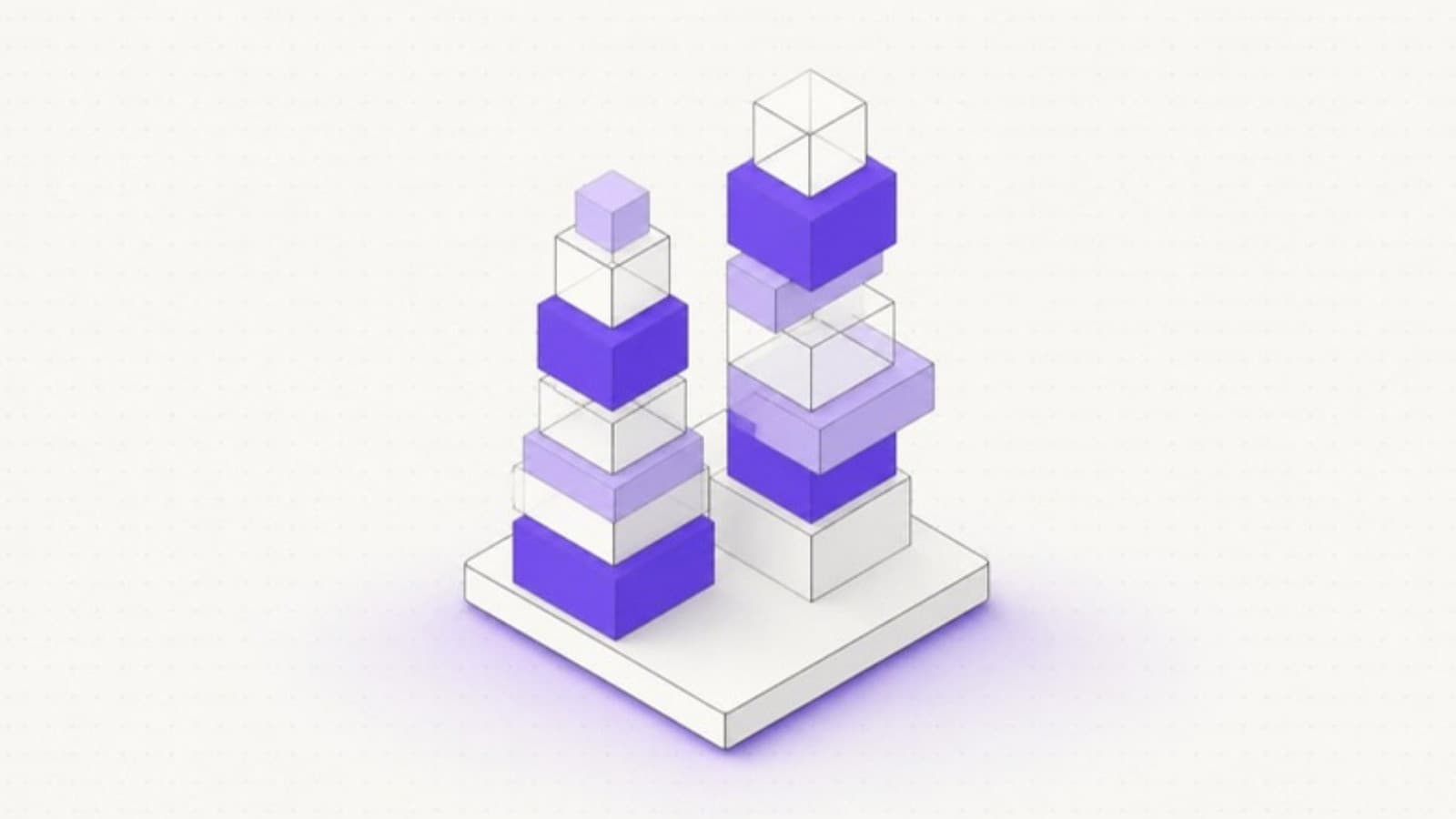
SBX GRID is a dual-layer decentralised infrastructure network. The first layer is a global grid of modular, AI-ready data centres, ranging from large 10–100 MW regional hubs down to kW-scale edge nodes, providing high-performance computing for AI training, inference, and cloud workloads. The second layer is a network of clean energy systems, solar, wind, hydrogen, and next-generation power sources, that supply those data centres with carbon-free electricity.
What makes GRID fundamentally different from AWS or Azure is not just the technical architecture, it is the ownership model. Every data centre in the GRID is tokenised, meaning fractional ownership is represented on-chain and can be held by anyone from a retail crypto investor to a sovereign wealth fund. Revenue from compute customers, colocation fees, AI training contracts, cloud service subscriptions, flows back to token holders as on-chain dividends. The crowd owns the infrastructure. The crowd earns from it.
"Compute power will be as critical as utilities like electricity. SBX GRID aims to provide this as a public utility, sovereign-grade cloud infrastructure that no single corporation or nation controls."
A global federation of modular data centres, from 50–100 MW AI training hubs to sub-MW edge nodes, orchestrated by blockchain and AI. Provides GPU compute, HPC, AI inference, and cloud services at up to 90% lower cost than hyperscalers.
An integrated clean energy network, solar, wind, hydro, geothermal, and future hydrogen/SMR, powering every data centre with carbon-free electricity. Energy usage and carbon offsets are tokenised on-chain for transparent ESG reporting.
The Market: Why Now?
The global data centre market is on track to exceed $500 billion by 2030. Data centre power capacity worldwide is expected to nearly triple, from 81 GW in 2024 to 222 GW by 2030, an 18% compound annual growth rate. This isn't speculative growth; it is being driven by concrete, immediate demand: AI model training, inference at scale, autonomous systems, and the infrastructure needs of a blockchain-native financial system.
Google and Microsoft alone planned over $155 billion in data centre and AI capex in 2025. Even at that scale, they cannot close the gap, GPU shortages, energy constraints, and the sheer speed of AI adoption have created a structural supply deficit. In 2024, AI startups reported waiting months for GPU access, or paying three to four times the standard rate on spot markets.
Meanwhile, the ownership of this critical infrastructure remains radically concentrated. Three corporations, Amazon, Microsoft, Google, control the majority of global cloud capacity. Small investors, emerging economies, and the broader tech community are excluded entirely from participation in or benefit from the infrastructure that increasingly runs the world. This is the exact same access problem that SUPERBLOCK is solving in real estate and financial assets, but applied to compute.
Technical Architecture: The Super Cloud
SBX GRID's architecture is built for global scale, modularity, and resilience, combining proven data centre engineering with a decentralised control plane and AI-driven operations management.
Prefabricated modules in 40-foot shipping container format, each self-contained with racks, cooling, and power. Rapidly deployed and aggregated like building blocks. Hubs scale from 10 MW pilot to 50–100+ MW by adding modules, hosting thousands of NVIDIA H100s.
Sub-1 MW micro data centres deployed at telecom exchanges, cell towers, and regional facilities. Handle low-latency AI inference, IoT processing, AR/VR rendering, and smart city workloads, reducing bandwidth costs and latency to near-zero for local users.
Every resource, GPU cores, memory, storage, is registered on-chain. Smart contracts match compute demand with supply across the global grid, scheduling workloads in a trustless marketplace. On-chain logs provide immutable auditability of every job executed.
AI-driven predictive scheduling optimises workload placement, identifies underutilised nodes, shifts loads to reduce energy consumption, and auto-tunes deployments for cost and performance. The longer the network runs, the smarter the optimisation becomes.
Hubs are prioritised in regions rich in solar, wind, hydro, and geothermal resources. Middle East pilot sites leverage high solar irradiance; European hubs tap hydroelectric and wind. All sites target net-zero electricity through on-site generation or PPAs.
Each data centre module is represented as an NFT on-chain, enabling fractional ownership by retail and institutional investors. Revenue from compute customers is distributed on-chain to NFT holders as dividends, the first time data centre infrastructure has been democratised at this level.
The Tokenised Economy of Compute
SBX GRID runs on a multi-tier token model designed to align every participant, compute users, infrastructure investors, energy providers, and governance participants, around the same economic incentives.
The real-revenue model distinguishes SBX GRID from purely speculative token projects. Compute customers, AI startups, blockchain protocols, enterprises, governments, pay for GPU access and cloud services in SBX tokens or stablecoins. Those revenues flow back to token holders through on-chain dividend distributions, making $SBX behave more like a productive infrastructure asset than a speculative instrument.
An AI research institute pays $2M annually for dedicated GPU cluster access on SBX GRID. The smart contract routes 70% to the node operators and infrastructure owners, 20% to the DAO treasury, and 10% to a buyback-and-burn mechanism. A retail investor who holds a $10,000 stake in a Data Centre NFT in the Dubai hub earns proportional revenue distributions quarterly, automated on-chain, no intermediaries, no minimum investment threshold. This is the data centre asset class, democratised.
Governance: Bicameral DAO with AI Oversight
SBX GRID uses a bicameral governance model, deliberately designed to balance broad community participation with expert institutional input. The first chamber is open to all $SBX token holders: one token, one vote on major decisions including new hub deployments, energy partnerships, protocol upgrades, and treasury allocations. The second chamber is an institutional council of elected representatives with domain expertise in data centre operations, energy infrastructure, and enterprise cloud, providing professional rigour without concentrating control.
Layered on top of both chambers is the same AI governance assistant used across the SUPERBLOCK ecosystem. Before any significant vote, the AI analyses the proposal, models the financial impact, assesses technical feasibility, and publishes its recommendation to the community. No single faction, not the founding team, not large token holders, not the institutional council, can dominate outcomes. The architecture is explicitly designed to prevent governance capture.
SBX GRID vs The Compute Landscape
SBX GRID competes in two markets simultaneously: the centralised hyperscaler market (AWS, Azure, Google Cloud) and the emerging decentralised compute market (Akash, Render, io.net). Its position is unique, bringing institutional-grade data centre infrastructure with community ownership and clean energy integration that neither camp currently offers.
| Capability | SBX GRID | AWS / Azure | Akash | Render | io.net |
|---|---|---|---|---|---|
| Community / tokenised ownership | ✓ NFTs + DAO | ✗ Corp-owned | ~ Token | ~ Token | ~ Token |
| Physical data centre infrastructure | ✓ Owned hubs | ✓ | ✗ User nodes | ✗ User GPUs | ✗ User GPUs |
| Clean energy / carbon-neutral | ✓ By design | ~ Partial | ✗ | ✗ | ✗ |
| AI-optimised orchestration | ✓ Native AI ops | ~ Some | ✗ | ✗ | ~ Basic |
| Revenue sharing to investors | ✓ On-chain dividends | ✗ | ~ Node rewards | ~ Node rewards | ~ Node rewards |
| Data sovereignty / compliance | ✓ Geo-enforced | ✓ | ✗ | ✗ | ✗ |
| Carbon credit tokenisation | ✓ On-chain ESG | ✗ | ✗ | ✗ | ✗ |
| SBX ecosystem integration | ✓ Native | ✗ | ✗ | ✗ | ✗ |
Centralised clouds offer reliability and compliance but zero community ownership and high margins captured entirely by shareholders. Decentralised compute networks offer token economics but rely on consumer-grade hardware with unpredictable performance and no clean energy commitment. SBX GRID occupies the gap: institutional infrastructure, community ownership, clean energy, and blockchain-native governance.
The Path to 1 GW
SBX GRID's rollout is structured in four phases. The first phase establishes a 10–20 MW pilot hub in the Middle East, capitalising on the region's solar resources, its strategic position as a connectivity hub between Asia, Europe, and Africa, and its increasingly progressive regulatory environment for digital infrastructure. This pilot validates the modular deployment model and establishes the first tokenised data centre NFTs.
Phase two scales to approximately 100 MW across four continental regions, building out hubs in Europe, Asia, and the Americas while the Middle East hub expands. Phase three activates the edge node network at scale, targeting 500 MW total capacity. Phase four reaches the 1 GW+ vision by 2030, positioning SBX GRID as a genuine planetary-scale alternative to AWS, Azure, and Google Cloud, but with a fundamentally different ownership structure where the community, not a corporation, captures the upside.
Alongside every hub deployment, GRID's SBX Academy programme trains local talent in data centre operations, AI infrastructure management, and blockchain, creating direct employment and skill development in every region GRID enters. This transforms data centre deployment from a purely extractive infrastructure investment into a regional development initiative.
"SBX GRID is more than a data centre project, it is a movement to build the compute layer of the new internet, owned by the community and operated for the benefit of all."
Why GRID Is the Missing Piece of SUPERBLOCK
Every other product in the SUPERBLOCK ecosystem depends, ultimately, on infrastructure. SBX Prime tokenises real estate, but the platform itself needs to run somewhere. SBX AURA settles transactions in real time, that settlement layer needs compute. SBX ID runs identity attestations, those proofs need to be generated and verified. SBX DAO governance happens on-chain, chains need nodes.
SBX GRID closes the loop. It is the native compute layer for the entire SUPERBLOCK ecosystem, and for the broader Web3 world that shares SUPERBLOCK's conviction that critical infrastructure should not be owned by three companies in Seattle, Redmond, and Mountain View. The goal, in GRID's own framing, is to be "Powered by Superblock, Governed by You", a compute grid where the founding team builds the technology, but the rewards and the control belong to the community that owns it.